

Vanderbilt OC Tim Beck, who was a part of the Split Back Veer offense at Pittsburg State, has since transitioned to a spread model. While the Veer elements, including their Belly G concept, remain integral to his Vanderbilt offense, the team is expected to adopt a more open approach. This change is partly due to the recent selection of 5-star Jared Curtis as the starting quarterback. Nevertheless, Belly G will continue to play a crucial role in their strategy, especially in short-yardage situations, as it has consistently proven to be highly effective for them.
In 2025, Tim Beck dialed up Belly G or QB Belly G 44 times (3.7 times per game), gaining a total of 244 yards (5.5 yards per carry), with 7 touchdowns, and a 63.64% success rate.
In 2026, he has already dialed it up 11 times (5.5 times per game), gaining a total of 50 yards (4.55 yards per carry), with 2 touchdowns, and a 72.7% success rate.
Tim Beck loves it so much that he opened the season against Austin Peay by running it 3 times in a row. We discovered several reasons why Beck relies on it so heavily.
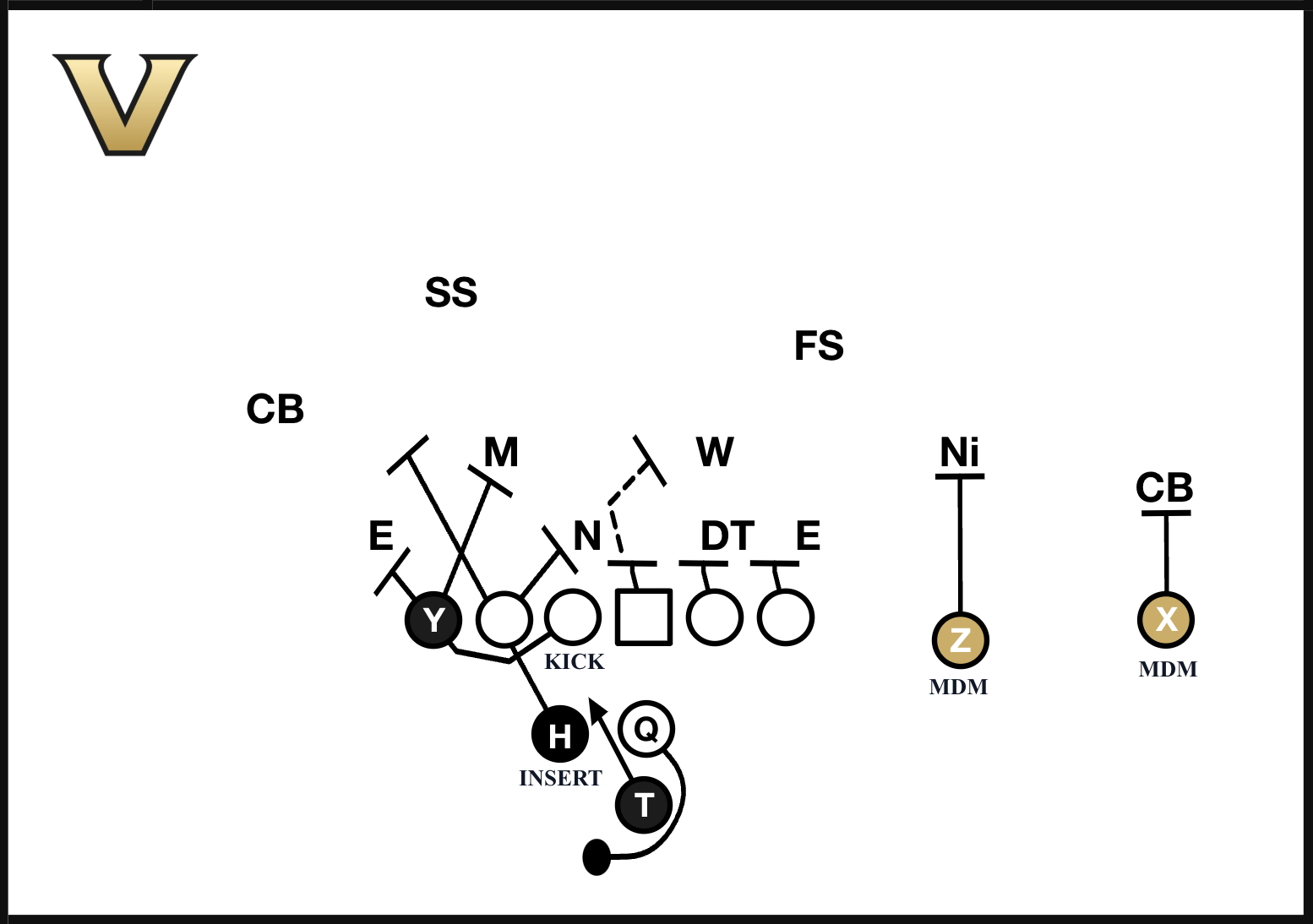
1. The Strong Side
You may have come across Joe Moore’s analysis of Vanderbilt’s strong side and quick side of their offensive line. This is one of the reasons why this concept is so effective.
Tim Beck runs Belly G towards the strong side, resulting in double teams by the strong tackle and tightend or an additional offensive lineman. This creates space for a quick kick out block by the strong guard on a smaller defender.
Cade McConnell, who was the starting quick guard last year, was moved to strong guard this year. Consequently, Tim Beck can now rely on someone familiar with the offense to handle the kicking.
This is a members-only post. Continue reading the full breakdown on Substack.
Read on Substack →